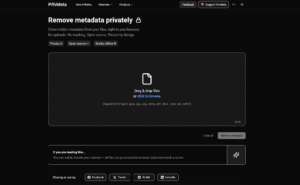
AI is getting more and more popular everyday, thus resulting in massive amount of AI slops and deep fakes. It has gotten so good that it is nearly indistinguishable. AI is still not perfect therefore we can still find imperfection in images, we can exploit those and identify the image is AI generated. Almost majority of AI generated images have AI watermark, It is the easiest way to identify the image is AI generated.
1. Watermark present in the image
Majority AI generators have their watermark on generated images, it is the most straightforward method to identify AI generated images, But it can be easily removed using watermark remover cleaner. You can identify watermark in AI images easily in corners of images.
This is google gemini’s watermark. This logo can be seen bottom right of the image

2. Image Metadata Checker
Watermark can be easily removed, but not many people remove metadata. Metadata usually contain where the image is generated, date and many more micro details about images. You can check metadata in software like photoshop, online metadata viewer site and more.
Eg: Metadata viewer – Click here to look metadata online
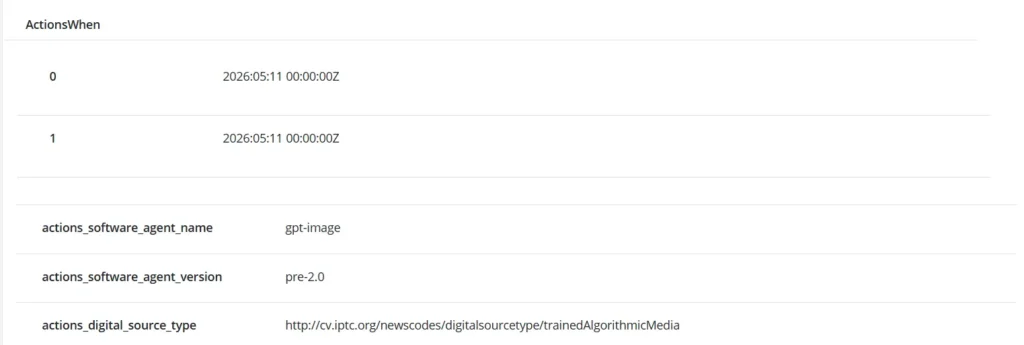
In the above image it says gpt-image, that implies the image was generated using AI.
3. AI Image Detector websites
There are several website that checks a image is made using AI, It is the most simplest way to check, They usually shows the percentage that the image is Real to AI
Click to visit Deep AI – AI Image Detector
0% is as real as it gets and 100% is AI generated without doubt. But the AI will never say 0 or 100 percentage therefore. Anything over 40% is considered AI generated and less than 15% is considered real.
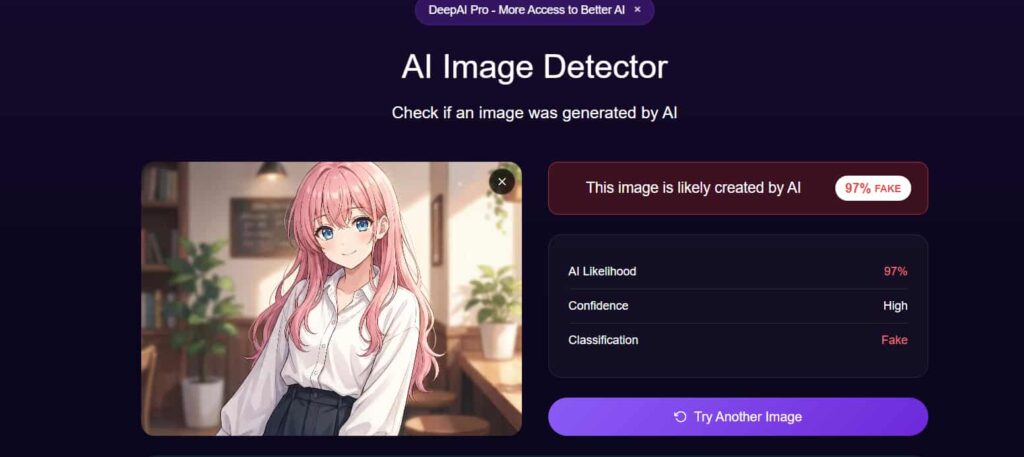
Please note that ai image detector is not always accurate, it may make mistakes.
4. Inaccurate details and over perfection in images
One of the most common mistakes AI makes in image generation is creating inaccurate or unnatural details. Problems such as unrealistic shadows, distorted text, and overly perfect appearances are still very common. When generating humans, AI often makes people look completely flawless, even though real humans naturally have wrinkles, uneven skin, and other imperfections. Another major issue is text inside images, which is often misspelled, inconsistent, or visually incorrect, making AI-generated images easier to identify.
Many AI flaws become visible when zooming closely.
Look carefully at:
- Eyes
- Teeth
- Fingers
- Edges of objects
- Background faces
- Text
- Accessories
Logical inconsistencies
Examples:
- Impossible physics
- Objects intersecting
- Wrong perspective
- Unrealistic poses
- Nonsensical environments
Who Can Benefit from AI Image Detection?
1. Journalists & Newsrooms
Examine images used in news reports to determine whether they have been altered or generated by AI. Detecting misleading visuals before publication supports trustworthy journalism and improves the accuracy of reported information.
2. Online Platforms & Moderation Teams
Use AI-powered image verification to protect platform credibility and enhance user confidence. By detecting and flagging suspicious AI-generated content early, platforms can reduce misinformation and prevent deceptive visuals from going viral.
3. E-Commerce & Marketplaces
Use AI image detection to verify the authenticity of product photos and reduce the risk of misleading listings. This helps preserve marketplace trust, ensures a fair shopping experience, and safeguards consumers from deceptive visual content.
4.Researchers & Educators
Educate students about the influence of AI-generated images and the challenges they present in the digital world. Developing media literacy and critical thinking skills enables learners to identify manipulated content and make informed judgments about the information they encounter.
5.Designers & Artists
Foster a responsible creative environment by balancing the benefits of AI-generated imagery with respect for originality and attribution. By disclosing AI involvement and detecting unauthorized reproductions, creators and platforms can maintain trust, fairness, and artistic integrity.
6. General Users
Strengthen your ability to navigate the digital world by understanding how AI-generated imagery can be used to spread misinformation. By learning to spot manipulated or synthetic images, you can make more informed judgments and help prevent the spread of deceptive content online.